
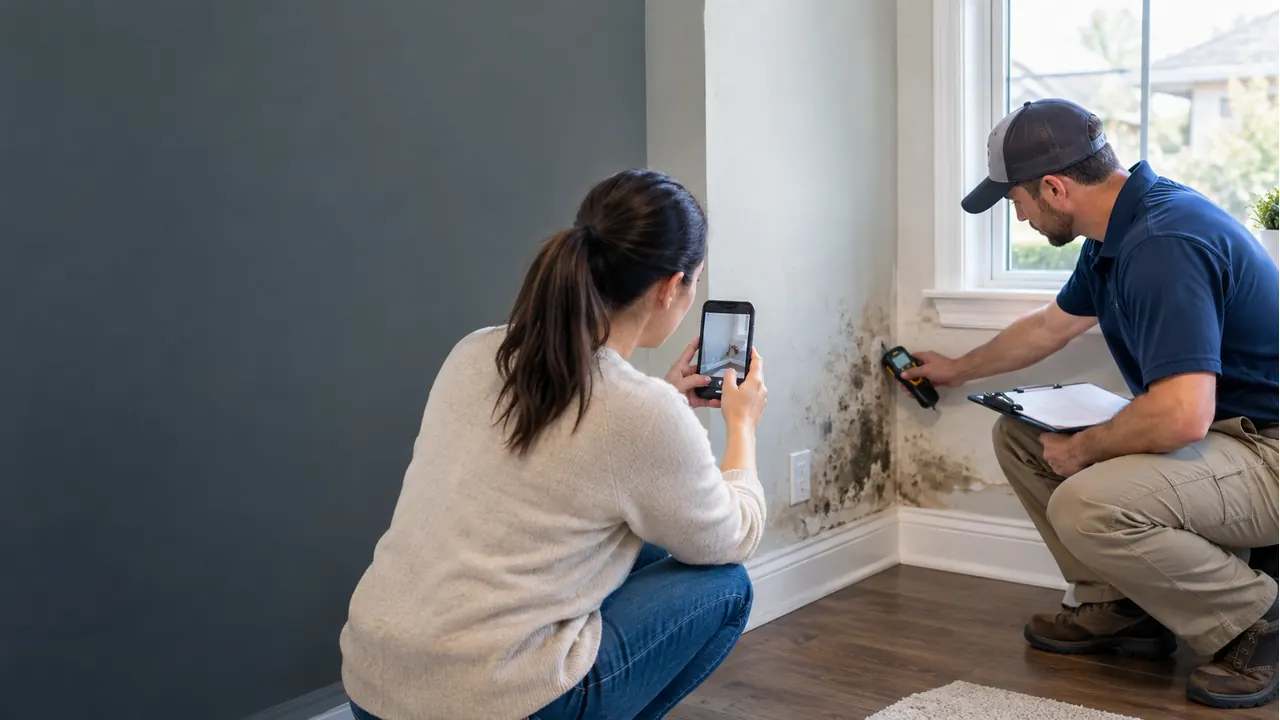
If you find mold after a plumbing leak, roof problem, appliance failure or storm, one of the first questions is usually: Will my homeowners insurance pay for this? The answer depends on what caused the damage and what your policy actually covers.
According to the Texas Department of Insurance (TDI), most homeowners and renters policies cover sudden and accidental water damage, such as a burst pipe, toilet overflow or broken washing-machine hose. If mold develops on property damaged by that covered water event, the mold-related damage may be covered. Policies usually do not cover damage from gradual leaks or seepage, and mold caused by flooding is generally outside a standard homeowners policy.
So, does Texas homeowners insurance cover mold?
Sometimes. TDI's current consumer guidance says most home policies cover sudden and accidental water damage and that mold developing on a damaged item may be covered. But policies usually exclude gradual leaks or seepage, including resulting mold damage. Flood-caused mold is also generally not covered by a standard homeowners policy because standard home insurance does not cover flooding.
There is another important wrinkle: mold cleanup and testing may be treated differently from repairing property damaged by the covered water event. TDI says most home policies do not include mold cleanup and testing after a damaged item is removed, although an insurer may allow you to add coverage for cleanup caused by a covered loss.
Texas also has approved mold-related endorsements. The Texas Department of Insurance endorsement information shows that available coverage can differ, including options for mold remediation and testing subject to limits and policy terms. That is why your declarations page, endorsements and exclusions matter.
When mold is more likely to be connected to a covered loss
Think about the cause and timing of the water event. Examples of situations that may be treated differently include:
- Burst pipe: A sudden pipe failure can be a covered water loss under many policies. Resulting damage and mold may be treated as part of that covered loss, subject to the policy.
- Broken appliance hose: TDI specifically lists a broken washer hose as an example of sudden and accidental water damage.
- Toilet overflow: A sudden overflow can be covered under many policies, while long-term seepage around a fixture may be treated differently.
- Long-term hidden leak: Gradual leakage or seepage is commonly excluded. Do not assume that finding the leak only recently means the leak itself was recent.
- Flooding: Standard homeowners policies generally do not cover flood damage. Separate flood insurance may be needed.
What to document before you call your insurance company
Good documentation can make it much easier to explain what happened and when. Start collecting evidence as soon as it is safe to do so.
- Date and approximate time you first noticed the water or mold.
- Where the water came from, if you know the source.
- Photos of the original source, such as a failed pipe, appliance hose or roof opening.
- Wide photos showing the affected room and close-up photos showing damaged materials.
- Short videos showing active leaking, standing water, staining or visible mold when safe.
- Photos of damaged furniture, flooring, drywall, cabinets and personal belongings.
- Receipts for emergency supplies, drying equipment, temporary repairs and other reasonable expenses.
- Invoices, estimates, inspection reports and written recommendations from contractors.
- Names, dates and notes from conversations with your insurer, adjuster and contractors.
- Your policy number, declarations page and any mold or water-damage endorsements you can access.
Photograph first—but do not put yourself in danger
If there is active water, your first priority is safety. If possible, stop the source and take reasonable steps to prevent additional damage. TDI recommends protecting your property after a sudden water loss; for example, shut off the main water supply after a pipe burst and move valuable items away from water when it is safe.
Do not enter unsafe areas, touch electrical equipment around standing water or disturb potentially contaminated materials just to get a photograph. If conditions are hazardous, document what you safely can and get professional help.
Keep a simple claim timeline
A one-page timeline can be surprisingly useful. Write down:
- When the incident happened or was discovered.
- When the water was stopped or the source was repaired.
- When you contacted your insurer.
- When an adjuster or contractor inspected the property.
- What emergency work was completed and when.
- When you received estimates, reports or claim decisions.
Keep copies of emails, texts, claim numbers, photographs and receipts in one folder. If you speak by phone, note the date, person's name and a short summary of what was discussed.
What about mold inspection, testing and remediation?
If you are seeing visible mold or suspect that moisture has affected hidden areas, the next step depends on the situation. A professional mold inspection can help evaluate the condition of the property, while moisture control and leak detection can help identify an ongoing moisture source.
After a covered or suspected water loss, water damage restoration may be appropriate to address drying and damaged materials. If mold is confirmed and remediation is needed, the work should be handled according to applicable Texas requirements. TDLR licenses mold assessment and remediation professionals, with specific exemptions and rules depending on the property and circumstances.
What if your mold started after a roof or storm problem?
Do not automatically label every storm-related mold problem as “flood damage.” The cause matters. For example, water entering through a storm-damaged roof may be evaluated differently from surface water that enters the home during a flood. Your policy's covered perils, exclusions and endorsements control the claim.
Document the storm date, roof condition, visible entry point, interior damage and any temporary measures you took. Keep receipts for reasonable temporary repairs. If you need professional help with moisture or mold in an attic or other area, you can review attic mold removal information before choosing a contractor.
Quick comparison: common Texas mold scenarios
| Situation | Typical insurance question | What to document |
|---|---|---|
| Sudden burst pipe | Is the sudden water loss covered? | Pipe/source, date, photos, drying and repair records |
| Gradual plumbing leak | Does the policy exclude long-term seepage? | When signs were first noticed, source, prior repairs and photos |
| Flooding | Is separate flood insurance involved? | Water source, flood conditions, photos and policy information |
| Mold after covered water loss | Does the policy include mold remediation/testing or only ensuing damage? | Original water-loss evidence, mold photos, reports, estimates and endorsement details |
Before you call: a five-minute checklist
- Take safe photos and videos.
- Identify and document the likely water source.
- Write down when you first noticed the problem.
- Save receipts and temporary-repair records.
- Find your policy, declarations page and endorsements.
- Keep a written claim timeline.
- Ask the insurer what your deductible, exclusions, limits and mold coverage mean for this specific loss.
Questions to ask your insurance company
- Is the underlying water loss covered?
- Is mold resulting from this covered water loss covered?
- Does my policy cover mold testing or remediation?
- Is there a mold-specific limit, deductible or endorsement?
- Is there an exclusion for gradual leakage or seepage that applies here?
- What emergency work should I do now to prevent additional damage?
- What documentation do you need before repairs or remediation begin?
When you need local help
If you are dealing with a water or mold problem, you can use this site to review service information and connect with independent local contractors in the communities we serve.
For moisture-related problems, start with Moisture Control & Leak Detection or Mold Inspection. If a sudden water event has already damaged the property, see Water Damage Restoration. These pages can help you understand the type of service to ask about; they do not determine whether your insurance claim will be approved.
Bottom line
Texas homeowners insurance can cover mold-related damage when it results from a covered sudden and accidental water loss, but gradual leaks, seepage and flooding are generally treated differently. Mold remediation and testing may also require specific coverage or endorsements. The safest approach is to document the event thoroughly, protect the property from further damage when safe, read your policy and ask your insurer exactly what coverage applies.
For authoritative Texas guidance, review the Texas Department of Insurance mold and water-damage guidance and the Texas Office of Public Insurance Counsel residential insurance resources.