
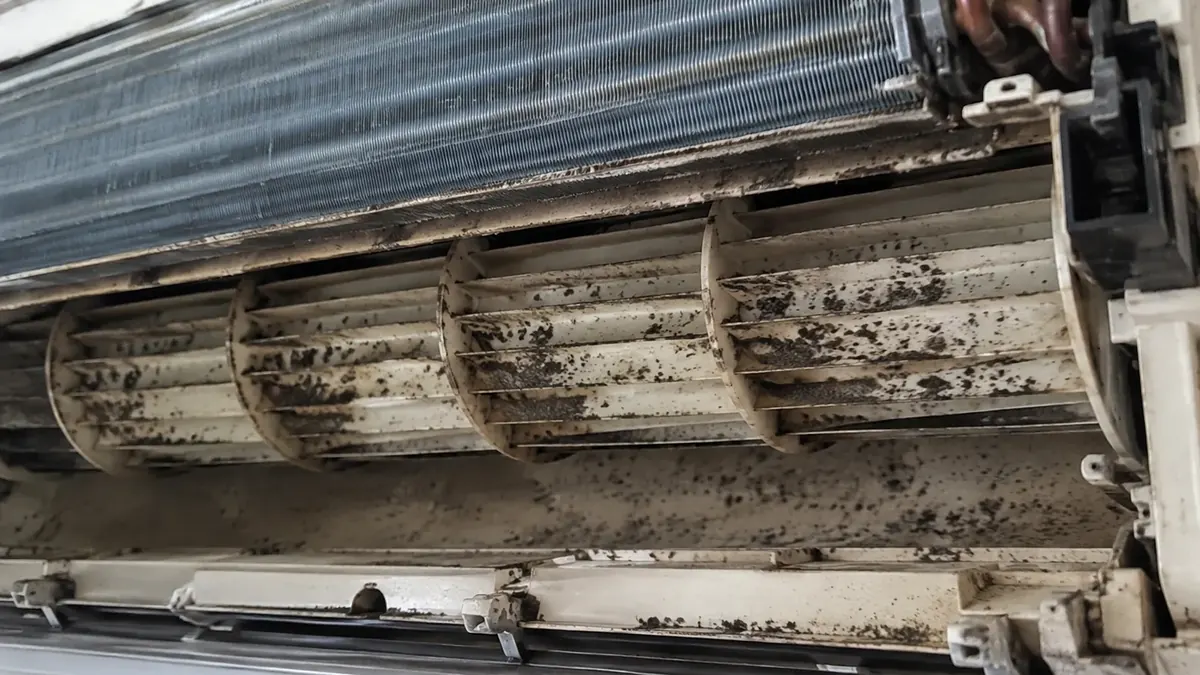
If you notice a musty smell when the air conditioner starts, see suspicious growth around a vent, or find moisture near your indoor AC equipment, it is reasonable to wonder whether mold in the HVAC system could be affecting how you feel.
The careful answer is: it can contribute to symptoms for some people, but you cannot diagnose an HVAC mold problem from symptoms alone. The CDC says people in damp buildings may experience respiratory symptoms, allergic rhinitis, worsening asthma and other problems, while the EPA notes that mold can cause allergic reactions and irritation. At the same time, many indoor-air problems have other possible causes, so it is important to investigate the building and talk with a healthcare professional about persistent or concerning symptoms.
What symptoms can mold exposure cause?
Mold exposure does not affect everyone in the same way. According to the CDC's current mold health guidance, people in damp buildings can report respiratory symptoms and infections, developing or worsening asthma, hypersensitivity pneumonitis, allergic rhinitis and skin problems. Mold-allergic people may experience sneezing, a stuffy or runny nose, itchy or watery eyes and skin reactions. Mold can also irritate the eyes, nose, throat and lungs in people who are not allergic.
These symptoms are not specific to mold. Colds, seasonal allergies, dust, pet allergens, smoke, other indoor pollutants and many medical conditions can produce similar complaints. If you are having ongoing symptoms, discuss them with a healthcare professional rather than trying to diagnose the cause from your HVAC system alone.
Could your AC be the source?
An HVAC system can move air throughout a home. If mold is actually growing on contaminated HVAC components or inside ductwork, spores or other particles can potentially be distributed through the air. EPA specifically advises that if you know or suspect an HVAC system is contaminated with mold, you should not run the system until the situation is evaluated because operation could spread mold through the building.
But the HVAC system also needs moisture before mold can grow. EPA identifies condensation, wet insulation, standing water, leaks and problems around cooling coils and condensate pans as important conditions to address. Fixing the moisture source is essential; otherwise mold can return after cleaning.
Signs that deserve a closer look
One clue by itself does not prove that mold is present. Look for a pattern of evidence, especially around the indoor air handler, cooling coil, drain pan, return/supply areas and accessible ductwork. In many Spring homes the air handler sits in the attic, where a leaking drain pan feeds growth — attic mold removal covers the decking.
- Substantial visible mold: EPA says substantial visible mold growth inside hard-surface ducts or on other HVAC components is a reason to consider professional cleaning or remediation.
- Persistent musty odor: A recurring musty smell when the system runs can justify further investigation, particularly when paired with moisture or visible growth.
- Water or condensation: Standing water, wet insulation, repeated condensation or a poorly draining condensate pan can create conditions that support mold.
- Wet or moldy duct insulation: EPA says wet or moldy fiberglass duct material generally cannot be effectively cleaned and should be removed and replaced by a qualified contractor.
- Recurring moisture damage: A leak, roof issue, plumbing problem or high humidity can keep feeding the problem even after visible mold is cleaned.
- Particles or debris blowing from registers: Heavy contamination that is actually being released into living spaces is more concerning than ordinary dust around a grille.
What does not prove you have mold?
It is easy to mistake normal HVAC dust for mold. EPA says a light amount of household dust or particulate matter in air ducts has not been shown to pose a health risk. Dust on a return grille is also normal because the grille is pulling room air into the system.
Likewise, a home air-quality test or petri-dish result by itself does not tell you that mold is growing in your ductwork. If someone claims your entire HVAC system is contaminated, ask them to show you the evidence and explain exactly where the suspected growth was found. EPA notes that a substance that looks like mold may require expert identification and, in some cases, laboratory analysis.
What should you do if you suspect HVAC mold?
- Put safety first. Do not enter unsafe areas or handle electrical equipment around standing water.
- If you know or strongly suspect HVAC contamination, avoid running the system. EPA advises against operating a known or suspected mold-contaminated HVAC system because it can spread contamination.
- Look for the moisture source. Check for leaks, condensation, standing water and drainage problems when it is safe to do so.
- Document what you can see. Take clear photos of visible growth, water damage, wet insulation, stains and the location of affected components.
- Do not automatically replace or clean every duct. EPA does not recommend routine duct cleaning. The right response depends on what is actually contaminated and what caused it.
- Get the right type of evaluation. An HVAC professional may need to address equipment or drainage problems, while mold assessment/remediation may be appropriate when there is confirmed or suspected mold contamination.
- Talk with a healthcare professional about symptoms. Especially do this if symptoms persist, worsen, interfere with daily life, or you have asthma or another condition that makes respiratory problems more concerning.
Why moisture control matters more than simply “killing mold”
Cleaning visible growth without fixing the moisture problem can lead to recurrence. EPA's guidance repeatedly emphasizes moisture control as the foundation of mold prevention. For an AC system, that can mean correcting a leak, improving drainage from the condensate pan, addressing condensation, replacing wet insulation or correcting humidity problems.
This is why a good evaluation should look beyond the visible spot. If the system is wet because a drain is blocked, for example, cleaning the affected surface without correcting the drainage problem does not solve the underlying cause.
Do you need air duct cleaning?
Not automatically. EPA says routine air duct cleaning is not recommended. Cleaning may be appropriate when there is substantial visible mold growth in hard-surface ducts or on HVAC components, vermin, or excessive dust and debris that is actually being released into the home.
If insulated duct material is wet or moldy, cleaning may not be enough. EPA says wet or moldy fiberglass duct material should generally be removed and replaced. Ask any contractor to identify the contaminated component and explain why the proposed work is necessary.
What about symptoms that improve when you leave home?
If you notice that symptoms are better away from a particular building and return after you spend time there, that is useful information to tell your healthcare professional. It can also be a reason to look for indoor environmental problems such as dampness, visible mold, poor ventilation or other pollutants.
However, this pattern still does not prove that mold is the cause. A building can contain multiple triggers, and symptoms can have unrelated medical causes. Treat the health question and the building question as two connected but separate investigations.
When professional help makes sense
If you find substantial visible mold on HVAC components, suspect contaminated ductwork, have recurring moisture around the AC system, or cannot identify the source of a musty odor, professional evaluation can help determine what is actually happening. If the growth on your coil or ducts is black mold, black mold removal under containment keeps spores from spreading through the house.
This article explains symptoms and what to check. If you already need the work done in Spring, TX, hire air duct mold removal for coil, pan and duct remediation. If moisture is the bigger concern, see Moisture Control & Leak Detection. If you need broader evaluation of suspected mold in the property, review Mold Inspection. Homeowners in areas such as Benders Landing, Imperial Oaks, Cypresswood and Gleannloch Farms can also use the site's local area pages to find information relevant to their community.
This site is a lead generation service connecting homeowners and businesses with independent local service contractors. The service pages explain what to ask about; they do not diagnose medical conditions or guarantee the work of any contractor.
Bottom line
Yes, mold in an HVAC system can be relevant to indoor air quality and may contribute to symptoms in some people—but you should not assume that every symptom is caused by mold. The strongest building clues are substantial visible mold, moisture, wet materials, recurring musty odors and other evidence of contamination.
If you suspect HVAC mold, focus on three things: protect your health, stop the moisture source, and verify what is actually contaminated. Avoid running a known or suspected contaminated HVAC system, get medical advice for ongoing or concerning symptoms, and use qualified professionals to evaluate the HVAC and mold conditions.
For authoritative information, see the EPA guidance on air duct cleaning, the EPA mold cleanup guidance, and the CDC/NIOSH mold health information.
Related: budgeting for the cleanup itself? See our guide to mold remediation cost in Spring, TX for what changes the price and what a written scope includes.