
A grey film spreading across the shower tile and a black patch creeping through the grout can look like the same problem on a tired Saturday morning. They are not - and the difference decides whether you need a scrub brush or a professional. Here is how to tell mold from mildew, in plain terms.
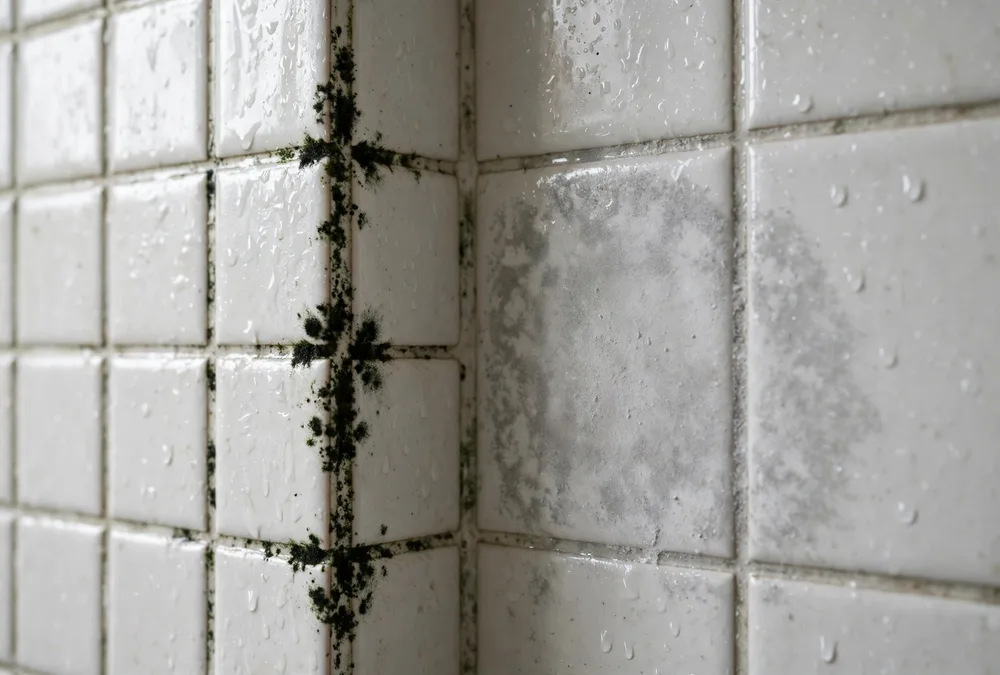
The short answer: mildew is the shallow one
Mildew grows flat, on top of things - tile, glass, painted wood, the rubber seal of a washing machine. It looks dusty or powdery, usually white, grey or light yellow, and it wipes off because it has not dug in. The molds that worry homeowners behave differently. They grow into porous materials like drywall, grout, wood and insulation, often look fuzzy or slimy, and come in darker colours - green, brown, black. Wiping the surface does not reach them, which is why they keep coming back after a quick clean. If you want the science of how growth hides inside a wall, our guide on how hidden mold is detected explains what assessors look for.
Side by side: look, feel, smell, depth
| Sign | Mildew | Mold |
|---|---|---|
| Colour | White, grey, light yellow | Green, brown, black, sometimes orange |
| Texture | Flat, powdery, dusty | Fuzzy, velvety or slimy, raised patches |
| Where it sits | On the surface of tile, glass, seals | In grout, drywall, wood, insulation, under flooring |
| Smell | Slightly sour, mild | Musty, earthy, noticeable through a room |
| Comes off? | Wipes or scrubs away | Stains remain, growth returns after wiping |
Colour alone is not proof. Some molds are light and some mildew darkens with age, which is why depth and location matter more than the shade. A patch you can feel sitting under the surface of the paint or grout is telling you the real story.
Where each one shows up in Spring homes
Spring, TX humidity does half the work for both. Mildew favours the wettest square feet of the house: shower walls and grout lines, the rim of a bathtub, window sills where condensation collects, front-load washer seals, and the inside of a closed closet against an outside wall. Mold that needs attention usually has a plumbing or building problem behind it - a slow supply-line leak under a sink, a shower pan failing behind tile, AC condensate overflowing at the air handler, or a roof leak feeding an attic. Our overview of what causes mold in Spring, TX homes walks through those moisture sources one by one. When the growth is in the shower or behind tile, our bathroom mold removal team finds the leak first, then removes the mold under containment. Under pier-and-beam homes, the crawl space stays damp enough for mold to grow on joists — crawl space mold removal covers inspection, cleaning and encapsulation.
What you can clean yourself - and how
Small, surface-level mildew on hard, non-porous materials is a normal homeowner job. Scrub it with detergent and water (a stiff brush helps on grout), rinse, and then do the step most people skip: dry the area completely and fix the ventilation so it stays dry. The EPA's mold cleanup guidance treats areas under about 10 square feet as usually manageable for homeowners on hard surfaces. Two cautions. First, never mix bleach with ammonia or other cleaners. Second, on porous materials - drywall, wood, ceiling tile - surface cleaners do not reach the roots of the growth, which is why scrubbed patches on a bathroom ceiling so often reappear within weeks.
Signs it is more than mildew
- It keeps coming back in the same spot within days or weeks of cleaning.
- The patch is fuzzy, slimy or spreading rather than flat and dusty.
- There is a musty smell but little to see - growth may be inside the wall or under flooring; that is the scenario covered by mold inspection and testing.
- It followed a leak, flood or AC problem, not just steamy showers.
- The area is large or on drywall, wood or insulation rather than tile or glass.
Dark, heavy growth also deserves a slower approach than a spray bottle - disturbing it without containment spreads spores through the room. Our page on black mold removal explains how those jobs are handled safely.
The Texas rule for the bigger jobs
Once growth covers 25 contiguous square feet or more, Texas treats it as a licensed job: the work must follow the state's mold rules, and the company that assesses the mold cannot be the company that removes it. That separation protects you twice - the assessment stays honest, and the price is built on a written scope rather than a guess. If you are wondering what that scope does to the final number, our guide to mold remediation cost in Spring, TX breaks down the factors.
Bottom line
Flat, powdery and on the surface? Clean it, dry it, and watch it. Fuzzy, dark, deep, smelly or stubborn? Stop scrubbing and get it assessed - the patch is a symptom, and the moisture behind it is the actual problem. When you are not sure which one you are looking at, a photo and a free call will usually settle it faster than another bottle of cleaner.